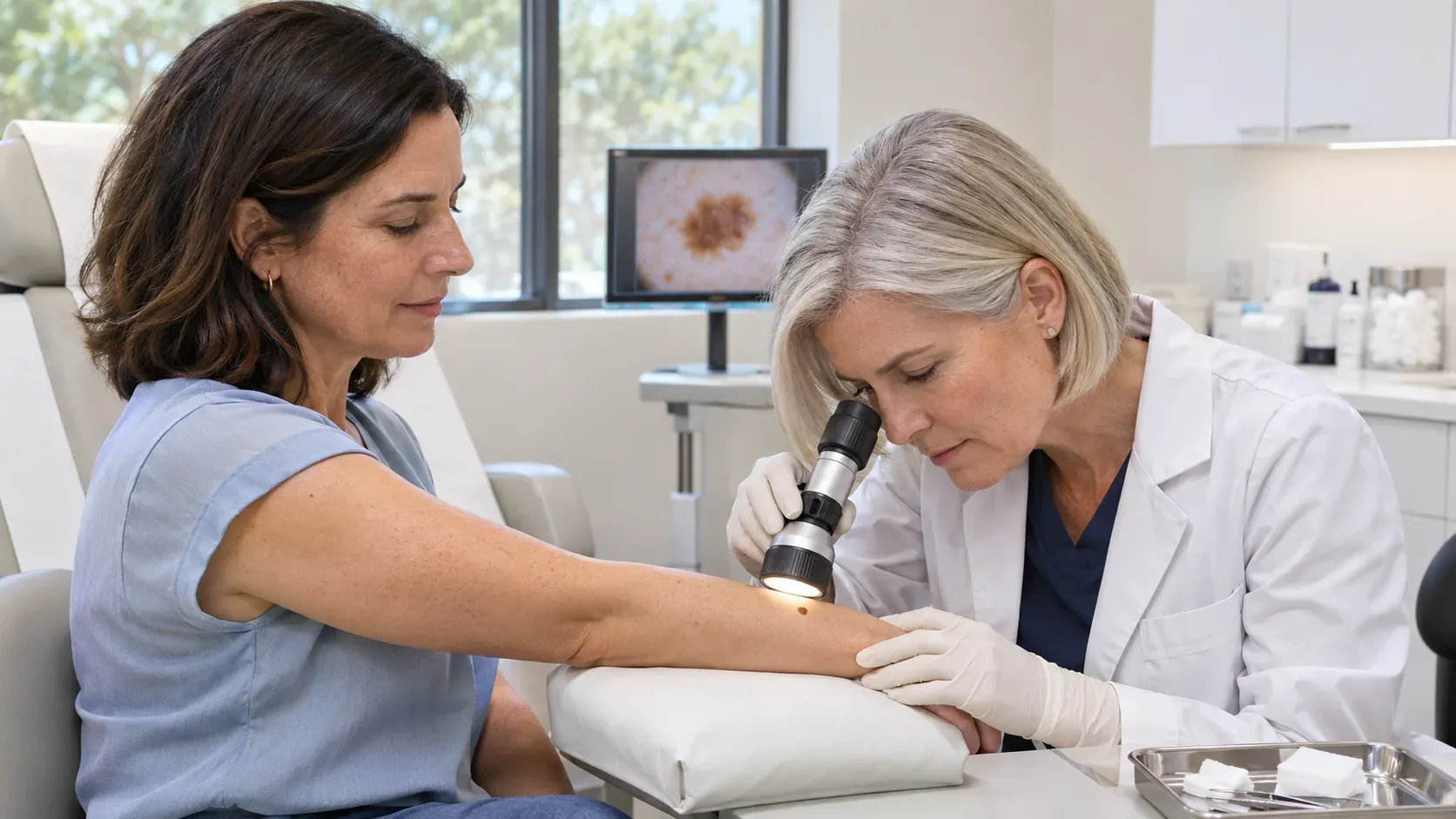
Explore 15 dermatology marketing strategies for medical, Mohs surgery, and cosmetic growth covering SEO, Google Ads, FAAD trust, and compliant galleries.
Dermatology practices serve patients with very different needs. Someone searching for an acne specialist wants medical guidance. A patient considering Botox or dermal fillers wants to understand aesthetic options. Someone referred for Mohs micrographic surgery needs clear information about the procedure, the surgeon, and the next steps. Marketing all three audiences with the same message can leave important opportunities untapped.
Effective dermatology marketing strategies connect each service to the right audience, answer the questions patients are asking, and make it easier to find the appropriate care. For practice owners and clinic administrators, this means building a marketing plan around medical dermatology, surgical referrals, and cosmetic growth rather than relying on general advertising alone.
1. Build a Dermatology Website That Supports Every Service Line
Your website is often where prospective patients decide whether your practice offers the care they need. A single page listing every treatment may not give them enough information to take the next step.
Organize your website around your main service categories:
- Medical dermatology: Create dedicated pages for acne, eczema, psoriasis, skin cancer screenings, and other conditions treated by your practice.
- Surgical dermatology: Explain procedures such as Mohs surgery, the referral process, and what patients can expect before and after treatment.
- Cosmetic dermatology: Give treatments such as Botox, fillers, laser procedures, and skin rejuvenation their own pages.
2. Strengthen Local SEO to Reach Patients Nearby
Many people begin their search with a location and a specific skin concern or treatment. Searches such as "dermatologist near me," "acne specialist in Dallas," or "Mohs surgeon near Houston" show why local visibility matters.
A focused local SEO strategy helps your practice appear when nearby patients are looking for relevant services.
Start with these steps:
- Keep your Google Business Profile accurate and complete.
- Select business categories that reflect the practice's actual services.
- Add current office hours, contact details, and appointment information.
- Create useful location pages for the areas your practice serves.
- Maintain consistent information across relevant healthcare directories.
- Encourage honest patient reviews and respond without revealing private health information.
3. Develop an SEO Strategy Around Dermatology Search Intent
Not every dermatology search comes from someone ready to book. Some people want to understand a skin condition, while others are comparing providers or looking for a specific procedure. Your content should address these different stages.
For medical dermatology, publish helpful information about conditions such as acne, rosacea, eczema, psoriasis, and suspicious skin changes. For cosmetic services, answer questions about treatment options, candidacy, recovery, provider qualifications, and expected outcomes.
Mohs surgery pages and cosmetic procedure pages also need different SEO approaches because they answer different patient and referral questions.
4. Create Separate Patient Acquisition Funnels
Medical, surgical, and cosmetic patients may visit the same practice, but they do not always follow the same decision-making process. Each service line needs a distinct acquisition approach.
Service line | Marketing priorities | Useful evaluation measures |
|---|---|---|
Medical dermatology | Condition-specific pages, provider availability, insurance information where applicable, and local search visibility | Qualified inquiries, appointment requests, attended new-patient visits |
Mohs surgery | Surgeon credentials, referral instructions, procedure information, and communication with referring practices | Referral completeness, response time, scheduled and attended appointments where appropriate |
Cosmetic dermatology | Procedure-specific pages, provider qualifications, consultation information, and treatment education | Qualified consultation requests, consultation attendance, acquisition cost where measurable |
5. Prioritize Marketing Activities Around Practice Needs
A dermatology practice does not need to launch every marketing activity at once. The right starting point depends on its services, appointment capacity, current performance, and growth priorities.
Before increasing marketing spend, consider four areas:
Appointment capacity: Identify which providers, services, and locations can accommodate additional appropriate appointments.
Current performance: Determine whether the main issue is low visibility, irrelevant inquiries, missed calls, incomplete referrals, or low consultation attendance.
Service priorities: Decide which services the practice wants to develop. Medical dermatology, Mohs surgery, and cosmetic treatments may have different operational and growth priorities.
Implementation readiness: Check whether the relevant website pages, scheduling options, referral processes, and approval procedures are ready to support additional demand.
6. Use Google Ads to Reach High-Intent Dermatology Searches
Organic search takes time to build. Google Ads can help practices reach people actively searching for specific dermatology services. Build campaigns around distinct service categories:
- Medical dermatology and condition-related searches.
- Mohs surgery and relevant surgical service searches.
- Cosmetic dermatology and aesthetic procedures.
- Location-specific searches for individual practice locations.
7. Use Social Media to Demonstrate Clinical Authority
Dermatology content is useful when it answers real questions rather than simply promoting treatments. Board-certified dermatologists can use social platforms to explain common skin conditions, introduce clinical services, and help people understand when a professional evaluation may be worth seeking.
Consider sharing:
- Short educational videos about common skin conditions.
- Dermatologist-led explanations of treatment options.
- Introductions to physicians and clinical staff.
- General skin health and sun protection reminders.
- Cosmetic treatment education that explains benefits and limitations.
8. Make Board-Certified Dermatologist Credentials Visible
Patients may not always understand the difference between a dermatologist and a provider offering cosmetic skin treatments. Your marketing should make the physician's training easy to recognize.
Where applicable, display the dermatologist's board certification, professional biography, clinical interests, and FAAD designation across the website and social profiles.
FAAD stands for Fellow of the American Academy of Dermatology. The American Academy of Dermatology explains that the designation identifies a physician who is board certified in dermatology and has completed the required medical and residency training. Use it only for physicians who hold the designation and keep provider information current.
9. Build a Strong Mohs Surgery Referral Marketing Strategy
Mohs micrographic surgery often involves a different audience from general dermatology services. Patients may arrive through referrals from primary care providers, general dermatologists, or other clinicians. For referring providers, make referral information easy to access. Consider including:
- A clear referral contact and submission process.
- Details about the records and pathology information your practice requests.
- Information about the Mohs surgeon's training and credentials.
- A process for communicating appointment and treatment updates.
- Instructions for coordinating follow-up when needed.
10. Use Before-and-After Photography With Clear Authorization
Before-and-after photographs can help explain cosmetic procedures, but they require careful handling. A photo is not simply another social media asset. It may contain identifiable patient information and communicate an implied treatment claim. Develop a consistent photography process:
- Obtain appropriate written patient authorization for marketing use.
- Explain where and how the images may appear.
- Use consistent lighting, camera distance, angles, and positioning.
- Keep the original images and maintain appropriate records.
- Do not retouch, filter, reshape, or otherwise alter clinical before-and-after photographs.
- Avoid captions that promise results or suggest every patient will achieve the same outcome.
11. Plan Seasonal Campaigns Around Skin Health and Patient Needs
Seasonal marketing gives dermatology practices useful opportunities to remind people about relevant services. The key is to connect each campaign to a genuine patient need.
For example:
- Spring and summer: Share sun protection education, skin cancer awareness, and information about skin checks.
- Late summer and fall: Publish educational content about changing skin spots and encourage patients to seek clinical evaluation when concerned.
- Winter: Share information about dry skin, eczema management, and seasonal skincare concerns.
- Year-round: Maintain educational campaigns about skin cancer screening and routine dermatology appointments.
12. Improve Patient Retention With Email and SMS Marketing
A new appointment is not the only opportunity to build a lasting relationship. Helpful communication can remind patients about scheduled visits, recommended follow-up, and relevant practice updates.
Consider using:
- Appointment reminders and scheduling confirmations.
- General educational newsletters.
- Recall messages for routine appointments.
- Follow-up communication approved by the practice.
- Cosmetic service updates for patients who have opted in to receive them.
13. Measure Which Marketing Activities Bring Patients In
Website traffic and social engagement can show whether people are finding your practice, but they do not tell the whole story. Start by defining what you are measuring. A phone call, submitted form, professional referral, a confirmed appointment, and attended visit are separate events. Track performance across:
- Organic search visits and service-page engagement.
- Google Ads calls and appointment requests.
- Social media inquiries.
- Referral sources for Mohs and medical dermatology.
- New-patient appointments by service line.
- Cost per lead and, where reliable attribution is available, cost per acquired patient.
14. Keep Dermatology Advertising and Patient Privacy in Check
Healthcare marketing needs to reflect what the practice can genuinely offer. A strong campaign should never depend on exaggerated outcomes, misleading testimonials, or unclear use of patient information.
Keep these considerations in your review process:
- FDA: Prescription-drug ads, including neurotoxin promotions, must be truthful and nonmisleading. Dermal fillers are regulated as medical devices and have separate requirements.
- FTC: Testimonials must reflect genuine experiences and avoid misleading claims about typical results. A "results may vary" disclaimer alone may not be sufficient.
- HIPAA: Covered practices generally need written patient authorization before using identifiable health information in marketing, subject to limited exceptions.
- Google and Meta: Follow current advertising rules for health-related targeting, cosmetic procedures, and audience selection.
15. Choose a Dermatology Marketing Agency That Understands Your Practice
A dermatology practice needs more than a generic marketing plan. Its agency should understand the differences between medical dermatology, Mohs surgery, and cosmetic services. Before choosing an agency, ask questions that reveal how it approaches your practice's actual needs:
- Service priorities: How would you prioritize our medical, Mohs, and cosmetic services based on appointment capacity and current performance?
- SEO and local search: Which website pages or local-search issues would you investigate first, and why?
- Paid advertising: How would you separate campaigns, review treatment-related advertising eligibility, and assess inquiry quality?
- Reporting: What can you reliably report, what data would you need from our practice, and where might attribution remain limited?
- Privacy and compliance: Who reviews advertising claims, patient-image permissions, and tracking decisions before publication or campaign launch?
Conclusion
Medical dermatology, Mohs surgery, and cosmetic treatments attract different audiences and require different marketing approaches. A practice that understands those differences can create more relevant content, reach patients with clearer intent, and make better use of its marketing budget.
Start by reviewing appointment capacity, current marketing performance, and the services your practice wants to develop. Then focus on the website pages, search campaigns, referral processes, and reporting that support those priorities. The goal is not simply to attract more clicks. It is to help the right patients find the right services and understand why your practice is qualified to provide them.